

The View From 8,200 Feet: What We Learned at MediaPost’s Data & Programmatic Insider Summit
Three takeaways from three days in Tahoe: agentic AI is here, data quality decides whether it helps, and the human layer is getting more valuable rather than less.
Last week Alliant spent three days in Olympic Valley for MediaPost’s Data & Programmatic Insider Summit, built around the premise, “The Algorithmic Era: Own Your Stack, Own Your Results.” We sponsored the afternoon ride up to High Camp featuring a cable car that climbs 2,000 feet in under ten minutes with 100 of your newest friends standing shoulder to shoulder in the cabin.
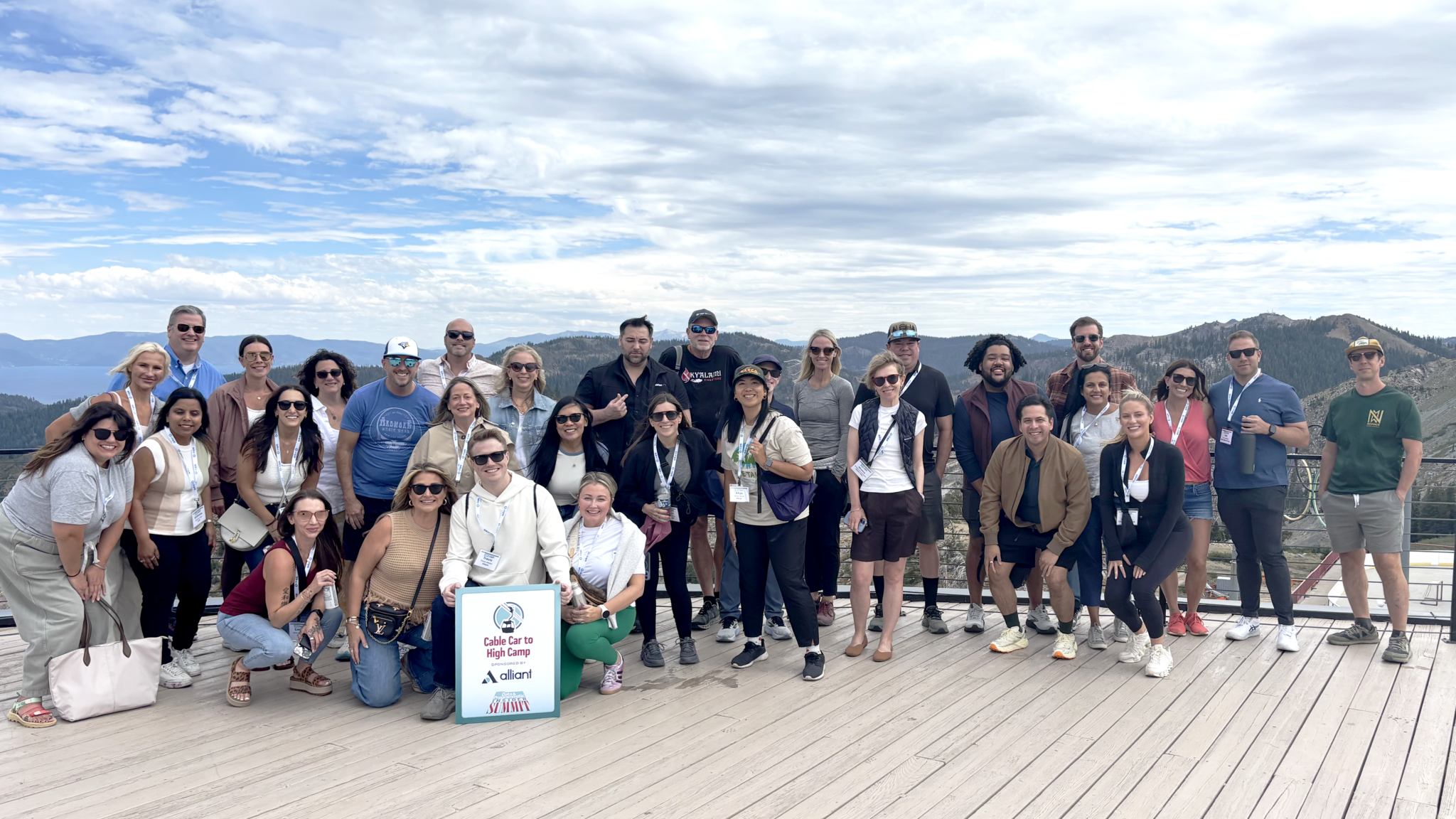
And it could not have been better timing, as it turned out. Agentic AI was the loudest conversation of the week, and the mountain gave everyone an excuse to get above it for an hour. However, the loudest conversation was not the one that ended up mattering most.
Three things looked clearer from 8,200 feet, and here are our key takeaways from MediaPost’s Data & Programmatic Insider Summit.
1. The agentic debate has moved from “is this real” to “where does it belong”
Nobody spent time arguing about whether agents are coming. They’re here and they’re already making calls that used to sit with a person.
The open question is scope. Where the room broadly agreed agents earn their keep:
- Searching for and assembling segments
- Bid optimization
- Supply-side and demand-side operations running at a pace no human team can match
Where it got less certain was around strategy, judgment about what the business is actually trying to accomplish, and anything that depends on understanding why someone behaves the way they do rather than just recording that they did.
A distinction worth keeping, however, is some decisions are going to agents because agents are genuinely better at them. Others are going to agents because the tooling made it easy. Those aren’t the same, and the second group is where problems tend to collect.
The interpretation: speed is the easy part. Direction is the hard part.
For example, one agency team described an agentic optimizer that recommended moving half of a client’s budget into a single channel. On the numbers alone, it wasn’t wrong. But no one had told it how that client feels about concentration risk, or what else that budget is quietly holding up. The agent made a defensible call with the information it had. A person made a better one.
2. Almost every session eventually turned into a data conversation
“Garbage in, garbage out” came up three separate times in three different contexts, and it wasn’t the same point each time.
- On AI: an agent inherits the quality of whatever it’s built on. A fast system on a shaky foundation is a more efficient way to be wrong.
- On measurement: the frameworks leadership actually trusts are the ones where the inputs hold up under questioning. A sophisticated model running on bad data doesn’t throw an error. It returns a confident number nobody should act on.
- On data foundations: the more automated the layer above gets, the less anyone is manually inspecting the layer below. Errors stop announcing themselves.
Taken together, that points somewhere slightly uncomfortable. Automation raises the cost of bad data rather than lowering it. When a person was doing the work, a person might have noticed something looked off.
Don’t just take our word for it – the point wasn’t ours and it wasn’t made by vendors. It came from the people buying, and it came up often enough that it stopped sounding like a talking point and started sounding like a requirement.
3. At a summit about data, AI, and automation, the strongest consensus was about people
This was perhaps the biggest surprise, and the logic behind it matters, because “relationships matter” on its own doesn’t say much.
When agents can talk to agents, and segment discovery and optimization and supply- and demand-side operations all happen machine to machine, that mechanical layer gets commoditized. Everyone’s automation ends up roughly as fast as everyone else’s, drawing on roughly the same signals.
What doesn’t commoditize is the layer above it – knowing who to call when something looks wrong, trusting a particular person’s read because you’ve watched them be right before, and being able to work out with a partner what all that automation should be pointed at. Automation compresses the transactional work while raising the value of human relationships.
There’s a reason the most useful conversations of the week happened standing shoulder to shoulder in a cable car, on a boat, or at dinner rather than between AI agents.
That also makes the next few years less comfortable than the pitch decks suggest. If the mechanical work is table stakes, then the differentiator is judgment, and judgment travels through relationships rather than APIs. That’s harder to scale, harder to automate, and harder to fake.
The short version
Agentic AI is real and it’s in the stack. The quality of the foundation underneath it decides whether it helps or just speeds up the mistake. And people still decide what the whole thing is pointed at, which is the decision that matters most.
That’s the view from 8,200 feet. Thanks to MediaPost for a quality few days and to everyone who rode up with us. If you were there, we’d be curious whether this matches what you took away.