

Catch Winter Travelers Before They Book
Winter travel decisions start long before the first snowfall. By the time peak-season campaigns hit the market, valuable ski travelers may already be well into planning, or even booking, their trips. Predictive audience data gives marketers a way to find these consumers earlier, while there’s still time to influence where they go, how they get there and what they buy along the way.
A traveler who doesn’t wait
Travelers looking to hit the slopes or spend time with family and friends in the comfort of a cozy mountain getaway aren’t waiting to start their planning. Flights, accommodations, rental cars, lift tickets, equipment and other details can turn a winter escape into a surprisingly complex purchase journey.
For travel and hospitality marketers, that makes timing especially important. Waiting until temperatures drop to start reaching winter travelers can mean entering the conversation after destinations have been considered, itineraries have taken shape and key travel decisions are already underway.
And the ski-loving consumer is a particularly valuable one to reach early.
Who this traveler actually is
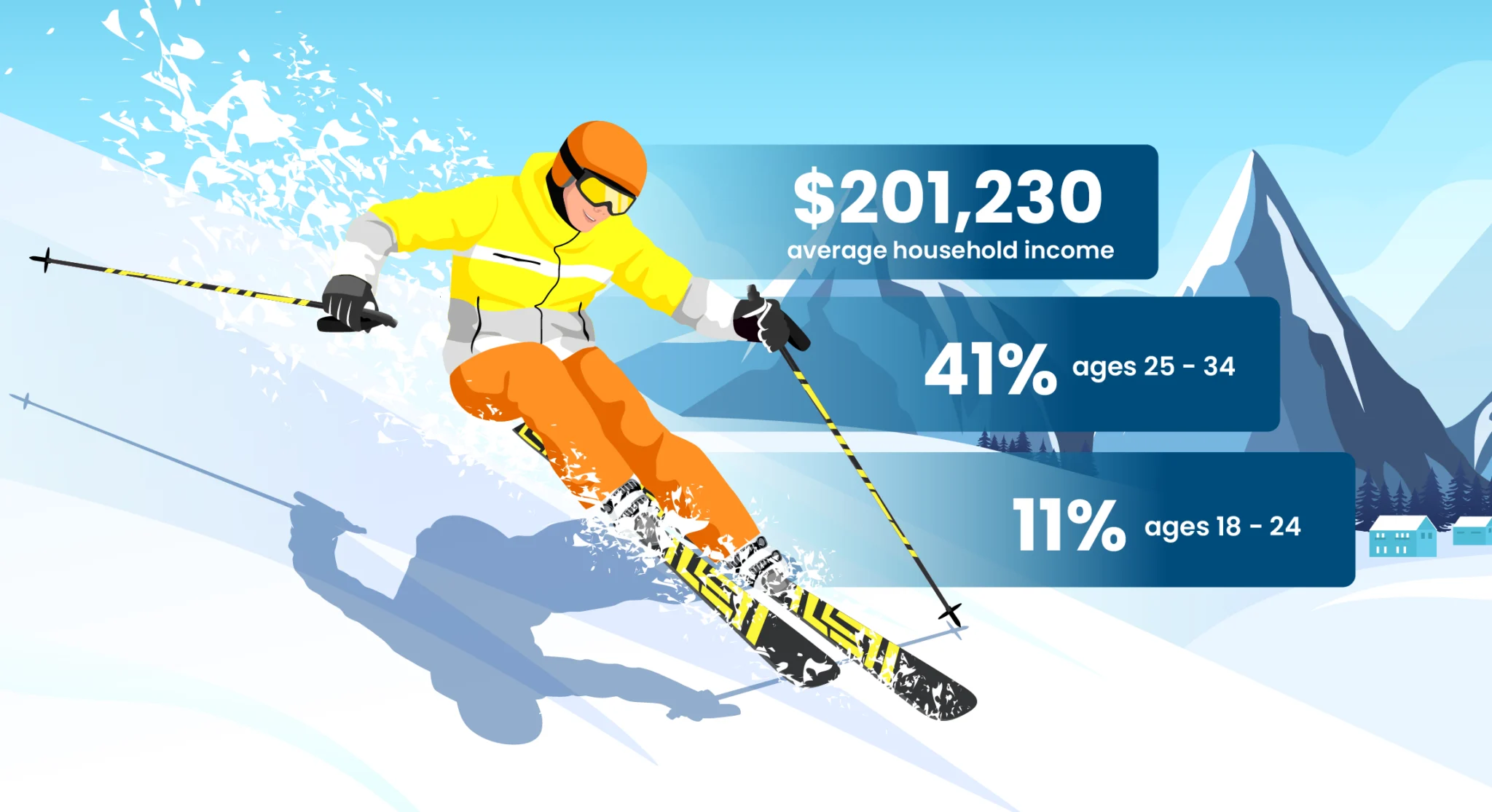
Travelers looking to hit the slopes have an average household income of $201,230, compared with $118,237 among the general population— a difference of roughly 70%. They also skew considerably younger, with 41% falling between ages 25 and 34 and another 11% between 18 and 24.
That combination of youth and purchasing power shapes a distinct profile: high earners early enough in their careers to prioritize experiences, employed full-time at rates well above the norm, and inclined toward brands and platforms before they go mainstream.
They spend well above average across dining, apparel, and home categories — a lifestyle built around discretionary spending, not one constrained by it.
Right consumer, right time, right message
Knowing who a traveler is only pays off if it changes when and how a brand shows up. This is where predictive audience data and proactive timing work together.
Predictive data identifies the traveler before the obvious signals appear — before a search for lift tickets or a click on a resort ad. It flags the affluent, early-adopter household most likely to plan a ski trip this season, based on who they are and how they behave, not just what they’ve already searched for. Proactive timing means acting on that signal early, while plans are still being formed, instead of waiting for the retargeting pool to fill up in November.
Paired together, they let very different winter travel brands sharpen the same opportunity in different ways:


The common thread: the same audience insight, applied earlier in the decision, changes the message from “come check us out” to “here’s what you need, right when you need it.”
Takeaways for travel marketers
For travel and hospitality marketers planning ahead of the season, Alliant’s travel audiences are built to close exactly that gap. TravelIQ segments identify travel intenders directly: the types of travel people enjoy, how much of their discretionary spend they dedicate to it, and whether they’re likely to be in-market for their next vacation. Custom Audiences can take that targeting further, layering in variables specific to a brand or category — from vehicle preferences and media habits to loyalty behavior and other predictive signals.
Explore Alliant’s Travel & Hospitality Audiences audience or get a custom audience recommendation to see how going custom can elevate your targeting even further.